Nine of Swords: Anxiety, Reversed, Love
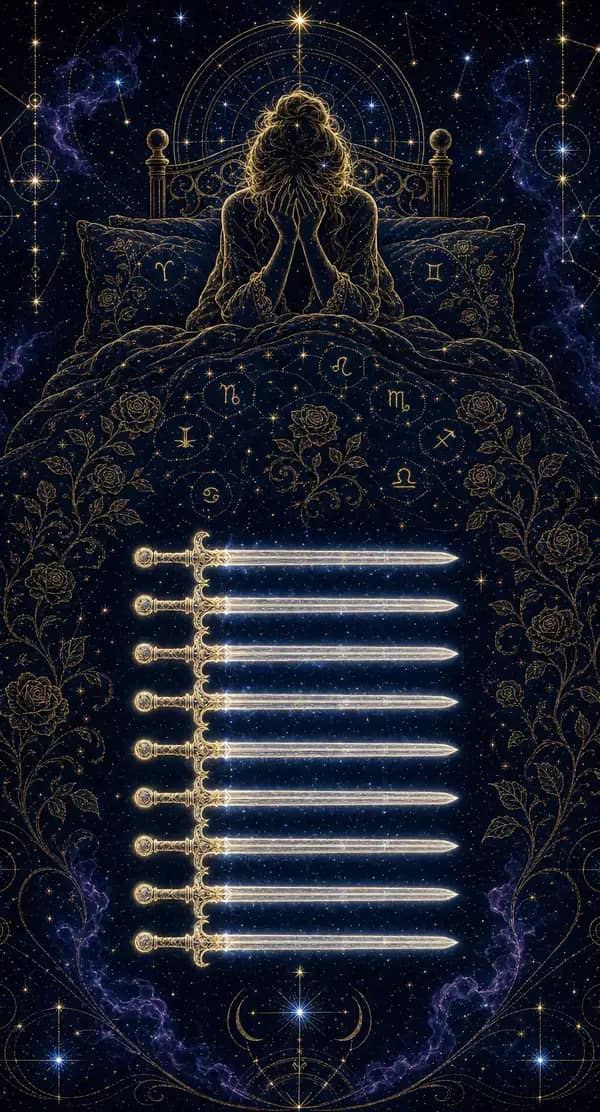
A figure sits up in bed in the dark, face in hands, nine swords lined along the wall behind. But the swords are on the wall, not in the sleeper. The Nine of Swords is the card of the three-in-the-morning mind, the fear that grows enormous in the dark, and the quiet fact that most of it lives in the imagining.
Nine of Swords meaning (upright)
Upright, the Nine of Swords is the deck's portrait of anxiety. It names the sleepless night, the worry that circles without landing, the mind that magnifies every fear once the lights go out. This card does not minimize the distress; it draws it exactly. If it has appeared for you, the weight is real, and the first thing this arcana offers is recognition: you are not imagining the heaviness, and you are not alone in carrying it.
But the image holds its counsel in the details. The swords hang on the wall behind the figure; not one of them touches the body. This is the card's central teaching, that the suffering it describes is largely anticipatory. It is the dread of what might happen, the replay of what has already passed, the tribunal the mind convenes at night with no defense allowed. The Nine of Swords shows worry doing its worst work in the dark, where nothing can be verified and everything can be feared.
In a reading, this arcana asks you to separate the fear from the facts. Anxiety insists that its stories are certainties; the Nine invites you to test them in daylight, where they usually shrink. What feels unbearable at three in the morning is often manageable at nine, not because the situation changed, but because the mind stopped amplifying it. The card's promise is not that nothing is wrong. It is that the size of the fear and the size of the problem are rarely the same.
Nine of Swords reversed
Reversed, the Nine of Swords marks the fear beginning to lift. The night is ending, the mind is quieting, and the worries that loomed so large are returning to their real proportions. This position often shows the moment relief arrives, when a dread finally gets spoken aloud, shared with someone, or simply exposed to daylight and found smaller than the dark had made it. The reversal is the card exhaling.
There is a second reading, quieter and important. Sometimes the reversal shows anxiety kept hidden, suffering carried in secret, a person putting on a composed face while the swords still hang on the wall inside. Here the card counsels disclosure. The fear that is spoken loses much of its power; the fear that is hoarded feeds on the silence. The reversed Nine, in this form, is an invitation to let someone in, and to stop guarding a distress that would ease the moment it was named.
Nine of Swords in love
In love, the Nine of Swords speaks of worry rather than event. It often names the anxious spiral about a relationship, the fear of loss rehearsed until it feels inevitable, the doubts that grow monstrous in the small hours and shrink by morning. The card asks you to notice how much of the pain is happening in the imagining. Love can survive difficulty; it struggles most against fears that were never checked against reality.
For someone single, it can describe the dread that a longed-for love will never come, a story anxiety tells with great conviction and little evidence. Reversed in a love reading, the arcana brings relief: a fear voiced and answered, a worry that dissolves once it is spoken to the person it concerns. The counsel is steady in both orientations. Take the fear out of the dark. Almost nothing survives being said plainly in the light.
What to ask when Nine of Swords appears
The Nine of Swords rewards questions that test the fear against the facts: what exactly am I afraid of, and how much of it is happening now? What would this worry look like spoken aloud in daylight? Who could I tell? It answers poorly to questions asked in the spiral itself, because its whole message is that the mind at night is an unreliable narrator, and the way through is to wait for, or reach for, the light.
In a quantum reading, this card's placement locates the source of the worry. Your ten cards are drawn by a quantum generator at the exact second you ask, so the draw belongs to the precise moment the fear was loud in you. In the past, the Nine marks a distress already easing; in the present, an anxiety asking to be spoken; in the outcome, it reassures that the dread will lift once it meets daylight. The surrounding cards show what the fear is truly about, and where it is larger than the fact.
Frequently asked questions
Is the Nine of Swords a bad omen?
It is a hard card but not a verdict. It portrays anxiety, sleepless nights, and worry, and it takes that pain seriously. Its key detail rescues it: the swords hang on the wall, touching no one. The card describes suffering that is largely anticipatory, and it points toward relief once the fear meets daylight.
What does the Nine of Swords mean reversed?
Usually the fear beginning to lift: the night ending, worries returning to real proportions, relief arriving when a dread is finally spoken or shared. In a second reading it shows anxiety kept hidden behind a composed face, and it counsels letting someone in, since fear that is named loses much of its power.
What does the Nine of Swords mean in love?
It usually points to worry rather than event: the anxious spiral about a relationship, the fear of loss rehearsed until it feels certain. It asks you to notice how much pain is happening only in the imagining. Reversed, it brings relief, a fear voiced and answered by the person it concerns.
How should I read the Nine of Swords in a spread?
As guidance, not doom. Treat it as a signal to separate the fear from the facts and to test your worst stories in daylight, where they usually shrink. The card's lucid message is that the size of the fear and the size of the problem are rarely the same, and the way out is through, not around.